
Questions to ask your grandparents
76 questions we’ve seen open people up, grouped by life stage. Plus how to ask them, how to record the answers on your phone, and what to do if you’d rather someone else held the camera.
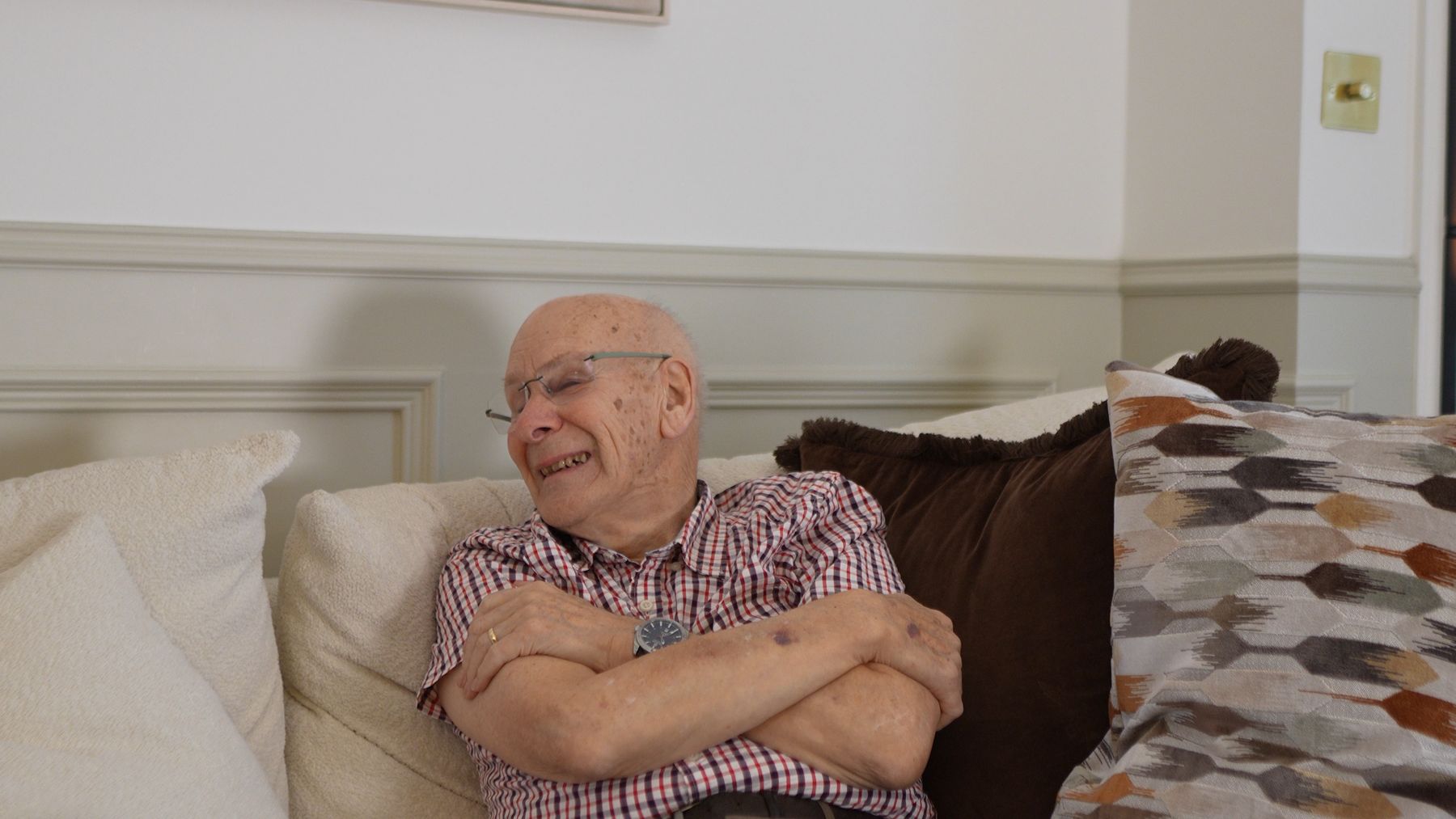
Why it’s worth asking now
Most of us know a handful of our grandparents’ stories. The one about the dance hall. The one about the war, or the strike, or the house with no hot water. We’ve heard them so often we think we know them.
Then one day you realise you don’t know how they met. Or what their mum was like. Or what they wanted to be before life got in the way. And there’s nobody left to ask.
We started The Memory Room after listening to a eulogy and realising that nobody really knows someone’s whole story. Not even the people closest to them. The good news is that most grandparents love being asked. They just rarely are.
You don’t need a plan, a camera crew or a free weekend. You need a cup of tea, a phone, and a few good questions. Here’s how we’d go about it.
How to ask, so they actually open up
We’ve sat in on a lot of these conversations. The questions matter, but how you ask them matters more.
Ask for stories, not facts
“Where did you grow up?” gets a place name. “What did your street look like?” gets ten minutes. Ask what it looked like, smelled like, sounded like.
Start small and easy
Don’t open with “tell me about your life”. Start with their first wage, their favourite sweets, their best pal at school. The big stuff comes later, on its own.
Use what’s around you
An old photo, a wedding album, a recipe card. Objects unlock memories that questions can’t. “Who’s that standing next to you?” is a brilliant question.
Follow the tangent
If they wander off topic, go with them. Some of the best stories we’ve filmed started as a “that reminds me…”. Your list will still be there.
Let the silence sit
When they pause, don’t rush to fill it. Count to five in your head. Often the real answer comes after the first one.
Don’t correct them
If the dates don’t quite match what Auntie Margaret says, let it go. You’re collecting their version, in their words. That’s the point.
Keep it short
Thirty to sixty minutes is plenty. Stop while they’re still enjoying it, and they’ll want to do it again next week.
Ask “what happened next?”
The simplest follow-up there is. Also: “How did that feel?” and “Why do you think that was?”
Share a little too
It’s a conversation, not an interview. Tell them what you remember. It often sparks something they’d forgotten.
76 questions to ask your grandparents
You won’t get through them all in one go, and you shouldn’t try. Pick five or six that feel right, and see where they lead.
The early years
- What’s the very first thing you can remember?
- What did your house smell like when you were small?
- Can you describe the street you grew up on? Who lived next door?
- What were your mum and dad like when you were little?
- Did you share a bedroom? Who with, and what was it like?
- What games did you play outside, and how far were you allowed to go?
- What was a normal Sunday like in your house?
- What did you have for your tea most nights?
- What was Christmas like when you were a child?
- Did you ever get into real trouble? What happened?
School and growing up
- What was your school like? How did you get there?
- Who was your best friend at school, and what trouble did you get into?
- Which teacher do you still remember, and why?
- What were you good at? What did you hate?
- What did you want to be when you grew up?
- How old were you when you left school, and how did you feel about it?
- What did you and your pals do at the weekend?
- What were your favourite sweets, and where did you buy them?
Teenage years and first jobs
- What was your very first job? How did you get it?
- What was your first wage, and what did you spend it on?
- What music did you love? Did you go to the dancing?
- What did you wear on a night out?
- What did your parents think of the music and fashion you liked?
- Was there a film, a band or a concert you’ve never forgotten?
- When did you first feel like a grown-up?
- What was the bravest or daftest thing you did as a teenager?
Love and courting
- How did you meet Gran (or Grandad)? Tell me everything.
- What was your first impression of them?
- What did you do on your first date?
- How did you know they were the one?
- How did the proposal happen?
- What do you remember about your wedding day?
- Where was your first home together, and what was in it?
- What’s the secret to staying together for so long?
- Was there anyone before them?
Work and the wider world
- What jobs have you done over your life? Which did you love most?
- Who was the best boss you ever had? And the worst?
- What was a normal working day like for you?
- What big news event do you remember exactly where you were for?
- How did life change when you first got a telly, a phone or a car?
- What were the hardest times, money-wise, and how did you get through them?
- What’s changed most about the world since you were young?
- Is there anything you think was better back then?
Becoming a parent
- What do you remember about the day my mum or dad was born?
- What was my mum or dad like as a baby? As a teenager?
- What was the hardest thing about being a young parent?
- What did you do as a family at the weekends or on holiday?
- What’s a story about my mum or dad they probably wouldn’t want me to hear?
- What did you learn from your own parents that you did differently?
- What were you most proud of as a parent?
- How did it feel the first time you held a grandchild?
- Tell me about the day I was born.
Family roots
- What do you know about your own grandparents?
- Where did our family come from, as far back as you know?
- What’s a story about your parents I’ve never heard?
- Who was the character of the family?
- Are there any family sayings, or words only we use?
- Is there a family mystery nobody ever got to the bottom of?
- Who in the family do you think I’m most like?
Home, food and traditions
- Who taught you to cook? What was the first thing you made?
- Is there a family recipe that should never be lost? Can you show me?
- What were holidays like? Where did you go?
- What traditions did your family have at New Year or Christmas?
- Which house you’ve lived in felt most like home, and why?
- What’s the one thing you’d save if the house was on fire?
- What made you laugh until you cried?
Looking back, and looking forward
- What would you tell your twenty-year-old self?
- What do you wish someone had told you at my age?
- What’s the best decision you ever made?
- Is there anything you’d do differently?
- What are you most proud of in your whole life?
- What’s the best advice you were ever given?
- What does a good life mean to you?
- What do you hope the family always remembers about you?
- What would you like to say to your great-grandchildren, even the ones not born yet?
- Is there anything you’ve never told anyone that you’d like to tell me now?
Print the questions as cards
Our free set of 12 conversation cards, taken from real Memory Room sessions. Print them, cut them out, and pass them round the table at Sunday dinner, at Christmas, or on your next visit to Gran’s.
Cards work better than a list. Nobody feels interviewed, and everyone gets a turn to ask.
How to record the answers on your phone
The questions are the hard part. Recording is easier than you think, and a phone is more than good enough to keep their voice and their face. A few simple things make a big difference.
- Sound first. People will forgive a slightly dark picture. They won’t forgive a voice they can’t hear. Turn off the telly and the radio, close the window, and sit somewhere with soft furnishings rather than a big echoey kitchen.
- Get the phone close. Within an arm’s length of them is ideal. If you have a cheap clip-on microphone, use it. It’s the single best thing you can buy.
- Turn it sideways. Film in landscape, so it plays properly on a telly later.
- Face the window. Sit them so the daylight falls on their face, not behind them. A lamp to one side helps on a dull day.
- Keep it still. Prop the phone on a pile of books or a small tripod, at their eye level. Then forget about it and just talk.
- Sit beside the camera. If you sit just next to the phone, they’ll look towards it naturally as they talk to you.
- Prepare the phone. Plug it in, check you have plenty of storage, and switch on Do Not Disturb so a call doesn’t stop the recording.
- Record your questions too. In ten years, you’ll be glad to hear your own voice asking.
- Back it up the same day. Copy the files to a computer or cloud storage, and send a copy to someone else in the family. Name each file with the date and what you talked about.
Can’t be there in person? A video call can work too. Most video apps let you record, or someone in the room can film on a second phone.
What to do with the recordings
Don’t let them sit forgotten on a phone. Share them with the family while your grandparents are here to enjoy it. Watching people react to their own stories is often the best bit, and it tends to bring out more memories.
Write down the three or four stories you’d hate to lose, in their words, and keep them somewhere safe. If you have old photos that go with a story, scan them and keep them together. And book the next chat. You’ll always think of more to ask.
Sometimes it’s better to let someone else ask
A phone recording is a lovely thing. But there are times a proper filmed conversation is worth it.
- They’d open up more to someone who doesn’t already know the story
- You want something the whole family will watch again and again, properly lit, with clear sound
- You’d like old photos and home videos woven through it
- A big birthday is coming and you want to give them something that matters
- Time feels shorter than it should, and you don’t want to risk getting it wrong
That’s what we do. In our cosy studio in Motherwell, or at home across the central belt and wider Scotland, we guide a relaxed conversation and turn it into a carefully edited 4K film in a keepsake box.
When Dennis sat down with his grandson David, he talked about growing up in wartime, serving in Korea, and 60 years with the love of his life. David wanted his newborn son to know the man who has always been his hero. Watch their story.
Our films start at £295. If someone you love is seriously ill, please talk to one of our specialists instead.
Pick one question. Ask it on your next visit.
Get our free printable question cards, and make the next family get-together the one where the old stories come out.