
How to record a legacy message
A gentle guide to recording the words you want your family to hear, in your own voice. What to say, how to record it simply at home, and when it might help to have someone beside you.
What a legacy message is
A legacy message is simply a recording of you, talking to the people you love. It might be your life story. It might be a few words for a grandchild’s wedding day. It might be nothing more than “I love you, and I’m proud of you.”
People record them for all sorts of reasons. Some are facing a difficult diagnosis. Some are caring for someone they love. Some just want to plan ahead, the way you’d write a will, so the important things are never left unsaid.
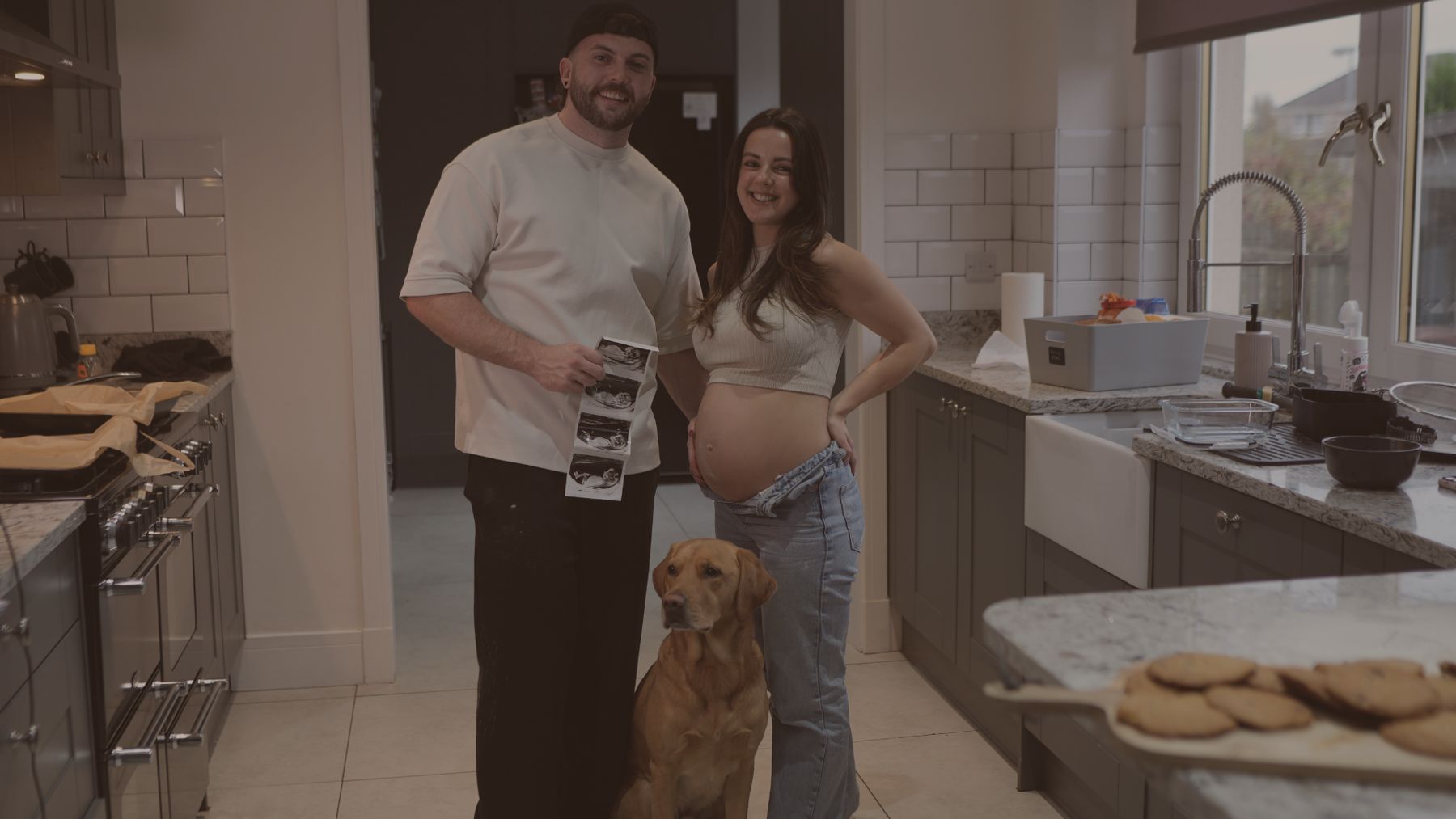
Before he became a dad, Dale sat down to record a message for his unborn daughter: his worries, his hopes, and the kind of person he was in that moment. She’ll only ever know him as “Dad”. One day, that film will show her who he was before everything changed. That’s a legacy message too. You can read about it on our stories page.
There’s no right age to do it, and no right way. Only yours.
A few kind things to remember
It doesn’t need to be perfect
Stumbles, pauses and laughter are what make it sound like you. Your family won’t want a performance. They’ll want you.
You can do it in pieces
Ten minutes today, ten more next week. Many short recordings are often easier, and just as precious, as one long one.
Think about who it’s for
One message for everyone, or a few words for each person? Picturing one face as you talk makes it much easier to know what to say.
Notes, not a script
Jot down a few words to jog your memory. Reading from a page tends to sound stiff. Talking from the heart doesn’t.
Have someone ask you
Many people find it easier to answer questions than to talk to a camera. A friend, a partner or a grown-up child can sit beside you.
You can always stop
If it gets too much, stop. Have a cup of tea. Come back to it another day, or not at all. It’s yours to shape.
Ideas to help you find your words
Most people don’t know where to start, and that’s completely fine. Pick whichever of these feel right, and leave the rest.
Your story, told your way
Where you grew up. The people who raised you. How you met the person you love. The jobs, the homes, the daft things you did when you were young. Your family will have heard bits of it. Hearing it from you, in order, in your own voice, is different.
What they mean to you
Tell each person what you love about them. Be specific. Not just “you’re a great son”, but the moment you knew it. The day they made you laugh until you cried. The thing they do that nobody else notices.
The memories you share
The holiday where everything went wrong. The Christmas everyone still talks about. The song you always sang in the car. Shared memories remind people they were part of your story, and you were part of theirs.
What you hope for them
Not instructions, just hopes. That they’re kind to themselves. That they keep in touch with their brother. That they go and see the places you always meant to. Gentle words like these are often the ones people return to most.
Words for the big days
A wedding, an 18th birthday, a first baby, a graduation. Days you’d want to be part of. A short message for each one, kept safe until the day, means you can still be in the room.
The things you know now
What life has taught you. What you’d tell your younger self. What really mattered in the end, and what didn’t.
Your wishes
The music you’d like, the way you’d like to be remembered, the things that matter to you. Saying them out loud means your family never have to guess.
Simply, “I love you”
Sometimes that’s the whole message. It’s more than enough.
If you’re stuck, try starting with one of these
- “The first time I held you, I thought…”
- “Something I’ve never told you is…”
- “When you’re feeling low, I want you to remember…”
- “The thing I’m proudest of in my whole life is…”
- “On your wedding day, I hope…”
- “I want you to know that…”
What you don’t need to say
You don’t have to tie up every loose end, or explain everything, or say goodbye. Many people choose not to. A legacy message can be warm, funny and ordinary. It can sound like a normal Sunday afternoon chat, because that’s what your family will miss most.
If there are harder things you want to say, that’s alright too. Take your time. You can always record them separately, and decide later who should see them.
How to record it simply, on a phone
You don’t need special equipment. A phone, a quiet room and a little patience are enough.
- Find a quiet, comfortable spot. Your favourite chair is perfect. Turn off the telly and close the door.
- Face the light. Sit facing a window, so the daylight falls on your face rather than behind you.
- Keep the phone close and still. Prop it at eye level, about an arm’s length away, turned sideways.
- Sound matters most. If you can, use a small clip-on microphone. If not, just keep the phone close.
- Take breaks. Record in short sections. There’s no rush.
- Keep it safe. Copy the recording somewhere else the same day, and make sure someone you trust knows where it is.
- Label future messages clearly. If it’s for a wedding or a birthday years away, write down who it’s for, when it should be shared, and who will look after it.
Let them lead
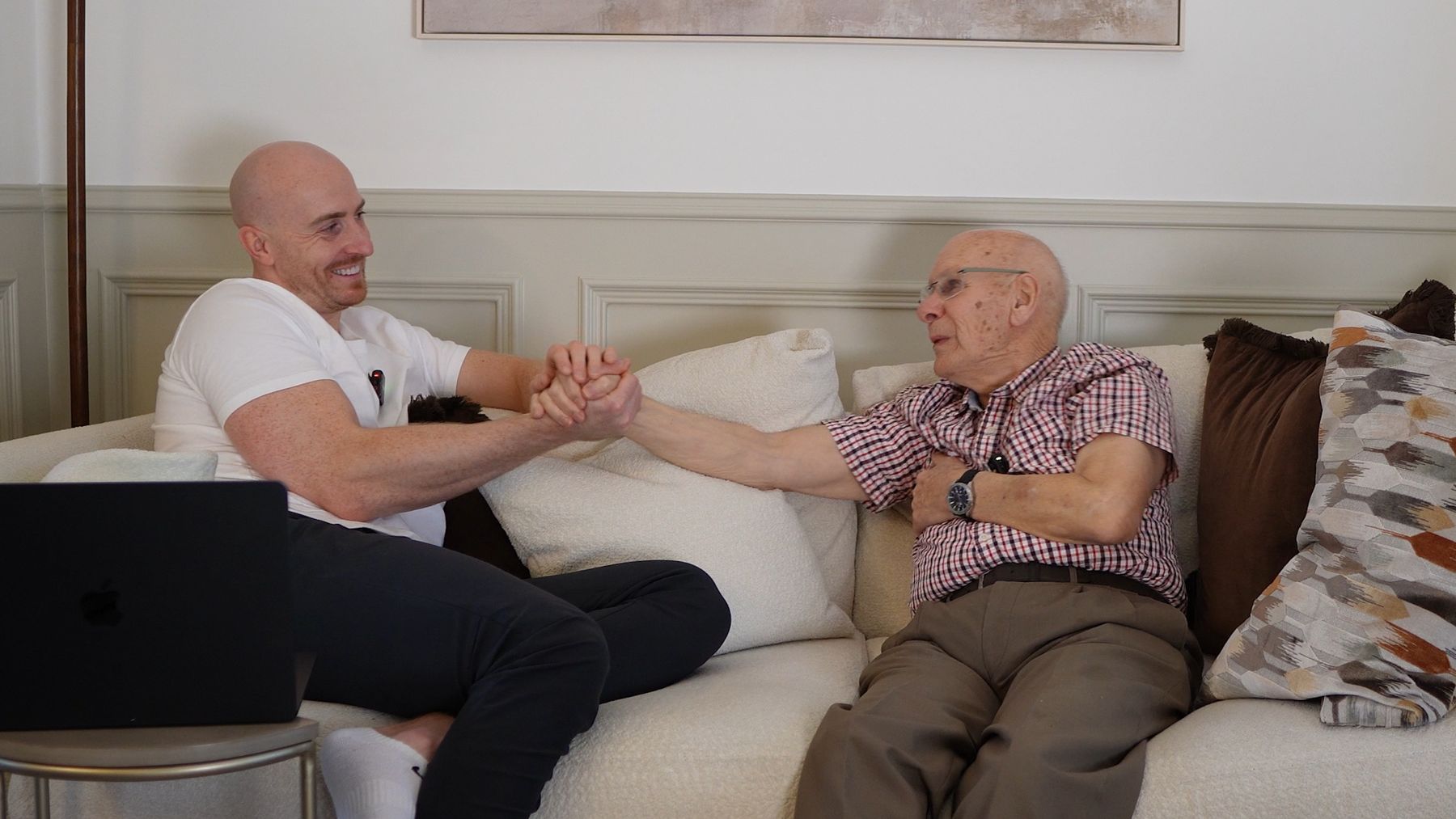
If you’re helping a parent, a partner or a friend record a message, the kindest thing you can do is follow their pace. Ask simple, open questions. “What do you remember about…?” “What would you like the grandchildren to know?” Then listen.
Watch for tiredness, and stop before they’re worn out. Keep it short. Let them laugh, let them cry, and don’t steer them away from either. If they don’t want to do it today, that’s fine. And if it feels too close for you to be the one asking, that’s completely normal. Sometimes people find it easier to talk to someone they’ve only just met.
Someone beside you, when you’d rather not do it alone
Recording a message yourself is a lovely thing. But if you’d like it filmed properly, or you’d rather someone else took care of every detail, we’re here.
We come to you
At home, in a hospice or care home, or in our quiet studio in Motherwell. Wherever you’re most comfortable.
At short notice
When time matters, we’ll do everything we can to come quickly.
Gently, at your pace
Short sessions, plenty of breaks, and you can stop at any time. Nothing is rushed.
Help finding the words
We’ll guide the conversation with gentle questions, or a family member can ask them with our support.
Completely private
Your film is only ever shared with the people you choose. Never online, never in our marketing.
Kept safe
If you’d like a message kept for a future day, we’ll talk with you about how to keep it safe until then.
Some words are too important to leave unsaid.
Every situation is different, so we don’t ask you to pick a package. Tell us a little about what’s happening, and one of our specialists will call you back at a time that suits you. You can also get in touch on behalf of someone else.
Not ready yet? Our free question cards are a gentle place to start, and you can read about our other life story films.